The InQuizitive Confidence Slider, Explained
A dial from 20 to 100 above every question. A wrong guess that barely stings at the low end. A right answer that barely counts at the high end. Almost every student drags it the wrong way.

What the slider actually does
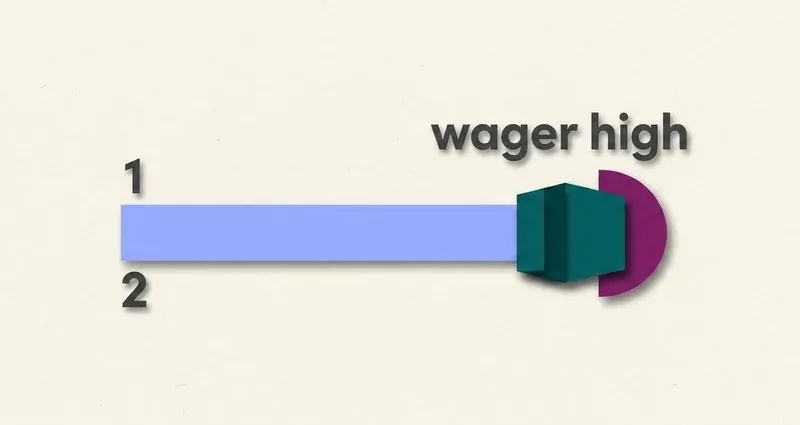
Before you answer an InQuizitive question, you set a confidence level on a slider. That setting decides what the question is worth: somewhere between 20 and 100 points.
It cuts both ways. High confidence means a correct answer earns near the top of that range, and a wrong one costs near the top too. Low confidence means a smaller win and a smaller loss. There's no setting on the slider that lets you win big and lose small; the two move together.
It's a wager on your own certainty, and a genuinely interesting piece of pedagogy. Norton isn't only testing whether you know the answer, it's testing whether you know that you know it.
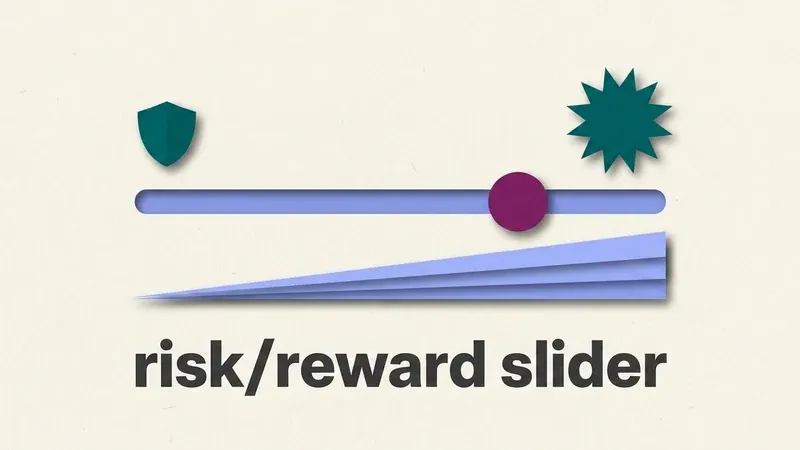
The slider isn't asking what the right answer is. It's asking how sure you are that you have it, and your grade is priced on the gap between the two.
Why most students play it wrong
The instinct, faced with a question you're not sure about, is to slide confidence down. Limit the downside. Play it safe.
That instinct is costing you your evening, and here's the arithmetic.
Your grade is the percentage of the Target Score you accumulate. Suppose the target is 1,000 points:
- At maximum confidence, roughly 10 correct answers clears it.
- At minimum confidence, roughly 50.
Identical knowledge. Identical clicks per question. Five times the work.
Hedging doesn't reduce your effort, it multiplies it. You've bought a smaller penalty by accepting an 80% pay cut on every right answer you give.
The asymmetry that makes hedging worse than it looks
A wrong first answer costs you points, and answering correctly on the second attempt only recovers half of them. So the "safety" you buy by hedging is protection against a loss you can already partly undo, paid for by capping every gain you make. The trade is bad in both directions.
The streak bonus makes certainty compound
There's a second effect that hedging quietly forfeits.
Five correct answers in a row earns a bonus equal to 5% of the Target Score: 50 points on a 1,000-point target, repeatable every time you string another five together.
Streaks reward exactly the behaviour hedging suppresses. A confident session doesn't just earn 5× per question, it also collects bonuses a hesitant one never triggers, which is why the gap between a good session and a bad one is measured in hours, not minutes.
And the adaptive engine punishes hesitation twice
One more mechanism worth knowing: it explains a feeling most students have had.
InQuizitive adapts: correct answers bring harder questions, wrong answers bring easier ones. Harder questions carry more weight toward your target. Easier ones carry less.
So a run of wrong answers doesn't only cost you points: it lowers the value of the questions you're about to be asked. The target genuinely recedes as you struggle. And after five wrong in a row, InQuizitive stops you with a Take a Break screen and points you back at the ebook.
If you've ever felt an activity getting longer the harder you worked at it, that's the mechanism. It isn't in your head.
A worked example: the same ten questions, three sliders
Same ten questions, same 80% accuracy, three slider settings, inside a 1,000-point activity:
- Slider at 20. 8 correct bank 160. The 2 misses net -10 each. Total: 140 points.
- Slider at 60. 8 correct bank 480. The 2 misses net -30 each. Total: 420 points.
- Slider at 100. 8 correct bank 800. The 2 misses net -50 each. Total: 700 points.
A 560-point gap between the worst run and the best, decided entirely by where the slider sat.
How to actually play the slider
The rule: set confidence to match your real certainty, then do the work that makes you certain.
Genuinely sure? Go high.
No reason to leave 80 points on the table because confidence feels arrogant.
Genuinely unsure? Go low, but notice it.
Right call here, but treat it as a signal, not a strategy.
Stuck in between? Check first.
Confirm the answer, then set the slider to match.
Protect a live streak.
A guess on question five risks the 5% bonus too, not just that question.
For the in-between case: using your textbook is the intended workflow, not a shortcut.
Slider mistakes that cost the most time
- Sliding to 20 out of reflex, even when you're sure. The costliest habit on the list.
- Sliding to 100 out of impatience on a genuine guess, just to end things sooner.
The real fix is upstream
The slider isn't a strategy problem. It's a certainty problem wearing a strategy costume. Nobody hedges because they've optimised for hedging, they hedge because they don't know the answer yet.
So the leverage is upstream of the slider. Do the reading, use the feedback properly, or shorten the loop: QuizSparrow works through the question on your screen at full confidence with one click, with step-by-step reasoning if you want to see it. That's exactly the input the slider is asking for. You're not guessing at 20 anymore, you're setting it to 100 because you have a reason to.
That's the whole difference, and on a 1,000-point target it's roughly forty questions you don't have to grind through at low confidence. More on that in how to finish an InQuizitive activity faster and the full grading picture in how InQuizitive is graded.
Frequently Asked Questions
What point range does the confidence slider cover?
Between 20 and 100 points per question, a five-times spread on identical work, depending only on where you set it.
If I hedge and still get the question right, do I lose anything?
Not directly, but you cap what the answer earns. Hedging doesn't protect a right answer, it just discounts it.
Why does a wrong guess at low confidence still slow me down?
A wrong first attempt only recovers half its lost points on retry, and low confidence caps every correct answer too, so the habit compounds fast.
Should I ever set the slider low on purpose?
Yes, when you genuinely don't know. The mistake is defaulting to it out of habit on questions you already know.